Assessment and Examination
About
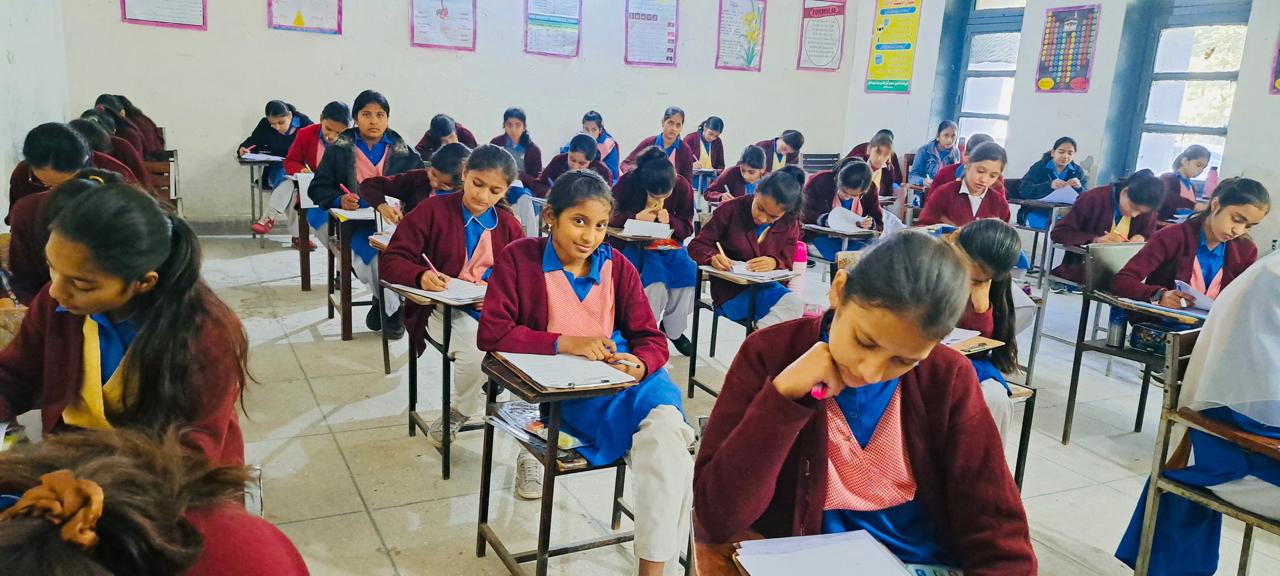
PECTAA plays a pivotal role in strengthening the education system of Punjab by designing and implementing fair, transparent, and standardized assessment methods. PECTAA conducts assessments & examinations for students from Grades 1 to 8 across the province, ensuring that learning outcomes are measured effectively and consistently. Through its School-Based Assessment (SBA) framework, PECTAA provides item banks, guidelines, and structured assessment tools that help schools assess students’ academic progress while encouraging critical thinking and problem-solving skills. By aligning with the directives of the School Education Department (SED), PECTAA ensures that assessments & examinations are not only valid and reliable but also supportive of meaningful learning and educational improvement.
Global Citizenship Education (GCED) and Assessment Reforms
Integrating Global Citizenship Education (GCED) into assessment reforms is essential for equipping learners with the competencies needed to navigate an interconnected and rapidly changing world. AEU aims to go beyond traditional academic metrics to evaluate critical thinking, intercultural understanding, ethical reasoning, and civic engagement – core dimensions of GCED.
Assessment Reforms will include competency-based frameworks, scenario-based tasks, and reflective assessments that capture learners’ attitudes and behaviours aligned with global values such as peace, tolerance, sustainability, and human rights. Embedding GCED in assessment practices not only supports the attainment of SDG 4.7 but also fosters inclusive, participatory, and equitable learning environments that prepare students to act responsibly at local, national, and global levels.
Foundational Literacy and Numeracy (FLN) and AEU Assessment Reforms
Assessment reforms play a critical role in strengthening Foundational Literacy and Numeracy (FLN) by ensuring early and accurate identification of learning levels, gaps, and progress in key competencies. AEU is ensuring inclusion and utilizing effective and reflective FLN assessment frameworks that emphasize age-appropriate, curriculum aligned tools that measure core skills such as letter recognition, phonemic awareness, oral reading fluency, number sense, and basic operations. AEU envisions shifting from high stakes summative testing to low-stakes, formative, and diagnostic assessments that inform instruction, guide remediation, and support individualized learning trajectories. AEU will ensure integrating technology-enabled assessments and continuous feedback mechanisms, enabling real-time tracking of student performance through Student Portfolios and instructional effectiveness, thereby contributing to the achievement of SDG 4.1.1a and ensuring every child attains the foundational skills necessary for lifelong learning.
AEU Assessments Leading as a Nexus of Curriculum Implementation, Training, Academic Research and Policy Actions
• Curriculum Implementation and Enhancement: The outcomes of our assessments play a vital role in shaping curriculum development. By identifying learning gaps and trends in student performance, we offer valuable insights to curriculum development authorities to align instructional content and textbooks with actual learning needs. Interventions are made by sharing Large-Scale Assessment (LSA) 2024 data on weak SLOs with book developers for the addition of simple and understandable content in books with a sufficient number of examples. It was further recommended that Textbooks should be provided with supplementary materials on time to ensure proper use in schools. LSA data received on difficult topics identified by teachers and students needs to be studied for developing improvement strategies. The results of the listening and speaking assessment should be examined for the addition of relevant exercises and practice content in the textbooks. This collaborative approach ensures that the curriculum remains relevant and adaptive to student needs and educational trends.
• Training and Professional Development: Our unit is closely involved in designing and delivering training programs for administrators and assessment specialists. By integrating assessment results into professional development, we provide targeted training that enhances teachers’ assessment literacy, enabling them to design more effective formative assessments and better interpret student performance.
• Collaborating with Research Departments: We actively collaborate with research departments to promote evidence-based assessment practices. Our unit supports research initiatives focused on improving assessment methodologies, psychometric analysis, and the impact of assessments on teaching and learning outcomes. Through these collaborations, we contribute to the broader academic discourse on assessment practices and ensure that our strategies remain at the cutting edge of educational research.
• Providing Feedback to Policymakers: By generating insights through data analytics, we provide critical feedback to policymakers on the effectiveness of current educational policies and practices. Our data-driven recommendations support informed policy decisions, ensuring that reforms are evidence-based and address the evolving needs of the education sector.
Assessment Policy Framework (APF) – An Initiative of the Government of Punjab – School Education Department (SED)
The Punjab Government has introduced the *Assessment Policy Framework (APF)* to reform elementary-level school assessments. This policy replaces previous examination systems, ensuring a structured and meaningful approach to evaluating student learning. It focuses on assessments that support education rather than just measuring outcomes. The framework applies to government schools but can also be adopted by private institutions.
The APF shifts from traditional high-stakes exams to assessments that enhance learning. The policy emphasizes system-wide improvements while keeping student growth at its core. Currently, it covers elementary-level government schools but allows flexibility for private sector adoption.
The framework aims to provide diagnostic insights into education performance at all levels – student, school, and district. It measures learning progress and identifies strengths and weaknesses.
Feedback mechanisms help teachers refine instruction. The policy also prepares Punjab for participation in national and international assessments like TIMSS, PIRLS, and PISA.
Key Assessment Components of Assessment Policy Framework (APF)
• Large-Scale Assessment (LSA): LSAs are sample-based evaluations assessing core literacy and numeracy skills. They help diagnose system performance without pressuring individual schools. Large-scale assessments are being conducted at various levels to measure the overall effectiveness of educational practices across regions and grades. As part of the implementation of the Assessment Policy Framework (APF), the Assessment and Exam Unit (PEC Defunct) has been commissioned to plan, administer, score, record and report the Large-Scale Assessment (LSA) at the elementary level in Punjab.
These assessments are aligned with international benchmarking of student performance on a larger scale, i.e., Global Proficiency Framework (GPF), providing key insights into systemic strengths and areas for improvement. The phased rollout starts with *Class 5 (2019/20) and expands to other grades. Results guide policy decisions, curriculum adjustments, and teaching improvements.
LSA 2024 is the fourth assessment of this nature, following the LSA 2021, LSA 2022 and LSA 2023. However, this is the first LSA conducted for Grades 2 & Grade 3. The current LSA also includes results from Private Chain, Private General, SpED, PWWF, DPS, L&NFBE, and Smart schools, in addition to SED, PEF, and PEIMA schools.
• School-Based Assessments (SBA)
As per the Assessment Policy Framework (APF), PEC (Defunct) has been mandated to technically facilitate schools in the conduct of School-Based Assessment (SBA). The salient features of SBA are:
1. Uniform assessment system
2. Curriculum-based assessment
3. Discourage rote memorization
4. Standardized assessment system across Punjab
5. Capacity building of teachers in item development
6. Empowering schools and teachers in the conduct of annual assessment
7. Provision of standardized items for schools
8. Promoting higher-order skills among students through quality assessment
9. Effective feedback to students and parents
10. Prepare students for the international assessment through exposure to quality items
• Inclusion of first-term and mid-term
As per the demand for the Assessment Policy Framework (APF), two terms were included i.e. first term in 3rd and 4th weeks of September and mid-term in 2nd and 3rd weeks of December in addition to end-of-year term in 2nd and 3rd weeks of March.
• Formative Assessment as an Upcoming Intervention: The upcoming intervention in Punjab is the scaling up of Formative Assessment, a strategy that will integrate continuous feedback into the learning process. This initiative aims to refine the learning experience by providing regular, actionable insights that guide instructional practices. By focusing on both academic achievement and developmental progress, formative assessments will play a pivotal role in fostering student growth and supporting targeted interventions.
Item Bank System (IBS)
The Assessment and Exam Unit (AEU) has been actively reforming its item development processes by integrating Information and Communication Technology (ICT) to enhance efficiency, scalability, and quality. The previously manual system for item creation and paper generation—once labor-intensive, resource-heavy, and limited in scope – lacked centralized storage and made external collaboration challenging.
To address these limitations, a digitized Item Bank System was developed using local resources and later upgraded with technical support from the World Bank through an IT firm. The revamped system enabled broader engagement of both internal and external item writers, significantly enriching the item repository. Additionally, the paper generation process now benefits from a streamlined, multi-tiered collaboration between subject specialists and assessment experts.
Salient features of AEU Item Bank System (IBS)
1. Item Development & Storage
• Word-like editing tools have been incorporated in it.
• Media Gallery is available to each user where images are stored.
• This system has multi-language support for English, Urdu and Arabic
• Plagiarism check is also a salient feature of IBS
• Test Assembly
• Pilot Paper can be generated with the requisite specification
• Page layout can be optimized as per the requirement
• Print or digital delivery of papers
2. Item & Test Level Statistical Data
• Psychometric data is tagged to each item
• Test-level information can be imported at any stage
• Item flimsy, with all the parameters of an item can be viewed/downloaded
3. User Management, Security, & System Performance
• Custom Role of each user (Item Developers, Subject Specialists, Assessment Experts
and Psychometrician, District Focal Persons and School heads)
• Multi-level authentication
• Minimum page load time
• Communication among users through online messaging
4. School Account
• User authentication through a QR code
• Auto paper generation as per the table of specifications with equated difficulty
• Page layout can be optimized to single column, double column, unilingual or bilingual etc.
• Auto key and rubric generation as per the selected question items
• Log maintenance at the level of each user
• Reports and stats are available to the AEU and district focal persons.
Achivements
Since its inception in March 2025, PECTAA has rapidly advanced assessment and examination reforms, building on the legacy of erstwhile Punjab Education Commission (PEC). While erstwhile PEC focused on elementary assessments only, PECTAA with the directives of the Government of Punjab, is all geared up to take the Grade 8 Examinations. Below is a summary of notable achievements, particularly in standardizing and modernizing evaluation processes:
Current Activities
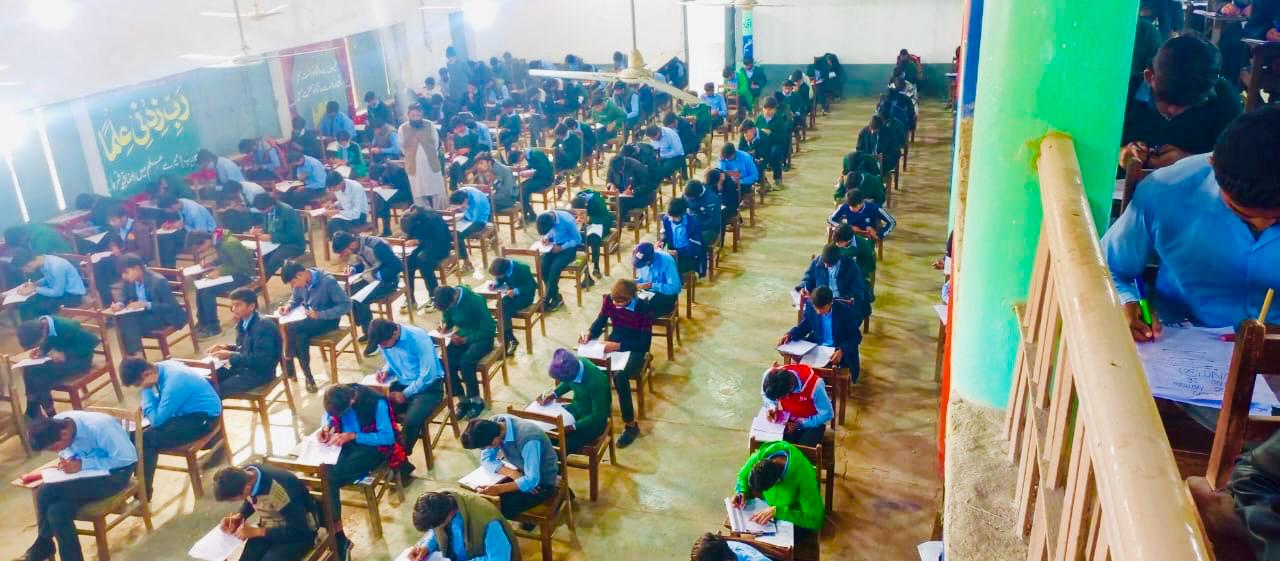
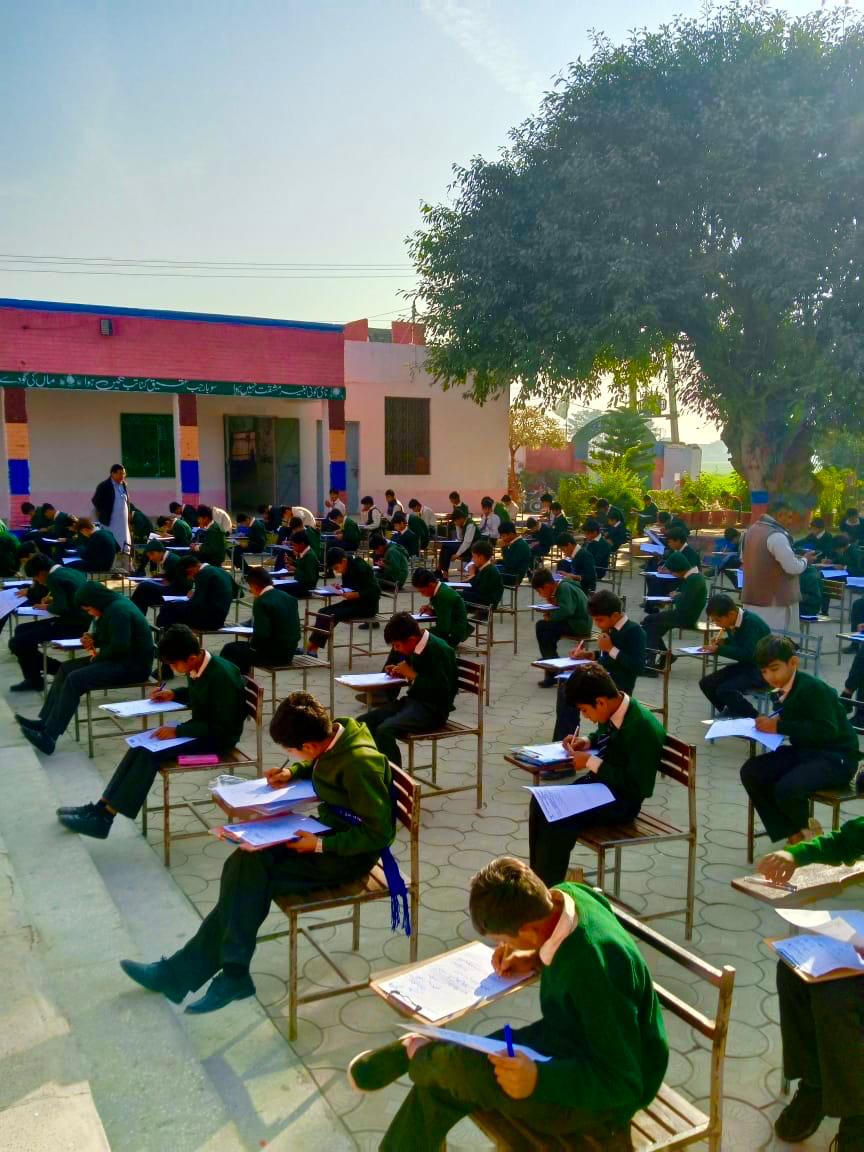
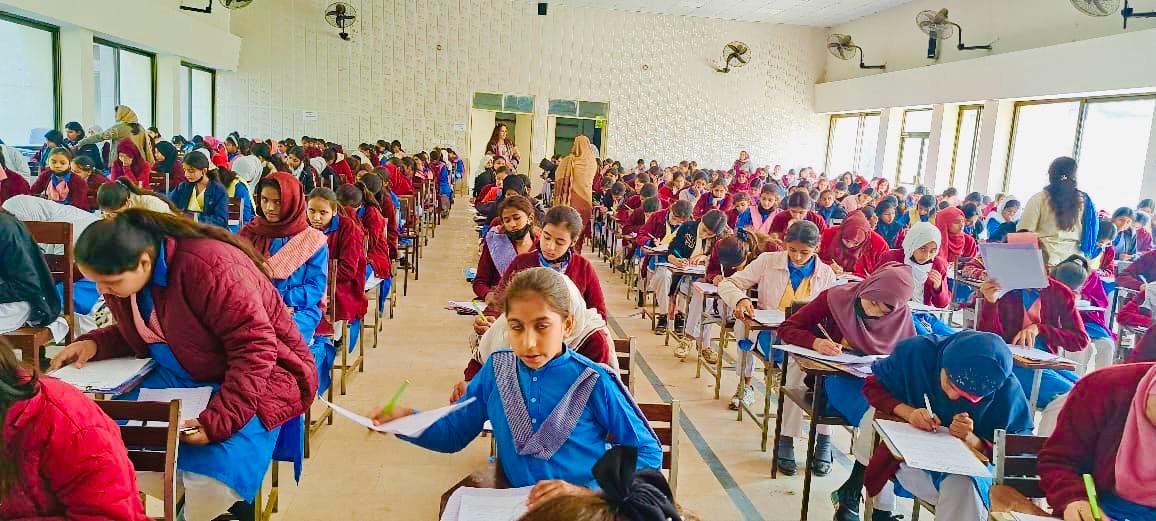
PECTAA is currently conducting the Combined School-Based Assessment (SBA) for the 2025-26 session. These assessments are scheduled from December 08 to December 19, 2025. The Item Bank was uploaded on December 01, and all schools have been directed to generate question papers through the IBS system by December 06. Marking and preparation of report cards will take place from December 09 to 20, followed by result sharing and Parent-Teacher Meeting (PTM) on the first working day after the winter holidays.
Combined-Term Assessments
Dec, 2025
Grade 8 Examinations 2025-26
March, 2026
Upcoming Activities
Looking ahead from December 2025, PECTAA is gearing up for key assessment milestones in the 2025-26 academic year. Final examination of Grade 8 will be held in the month of March 2026. Grade 8 examinations will be taken on four subjects i.e., English, Urdu, Mathematics and Science. These examinations will be conducted center based across Punjab.
PECTAA envisions to establish regourous, equitable examination system that accurately measures learning outcomes and student performance.